Who shapes your view?
Welcome to Lens in eight. How much of what you see depends on choices made before the picture reaches you? This issue starts with your social media feed, then travels across the Solar System.
A choice over your feed
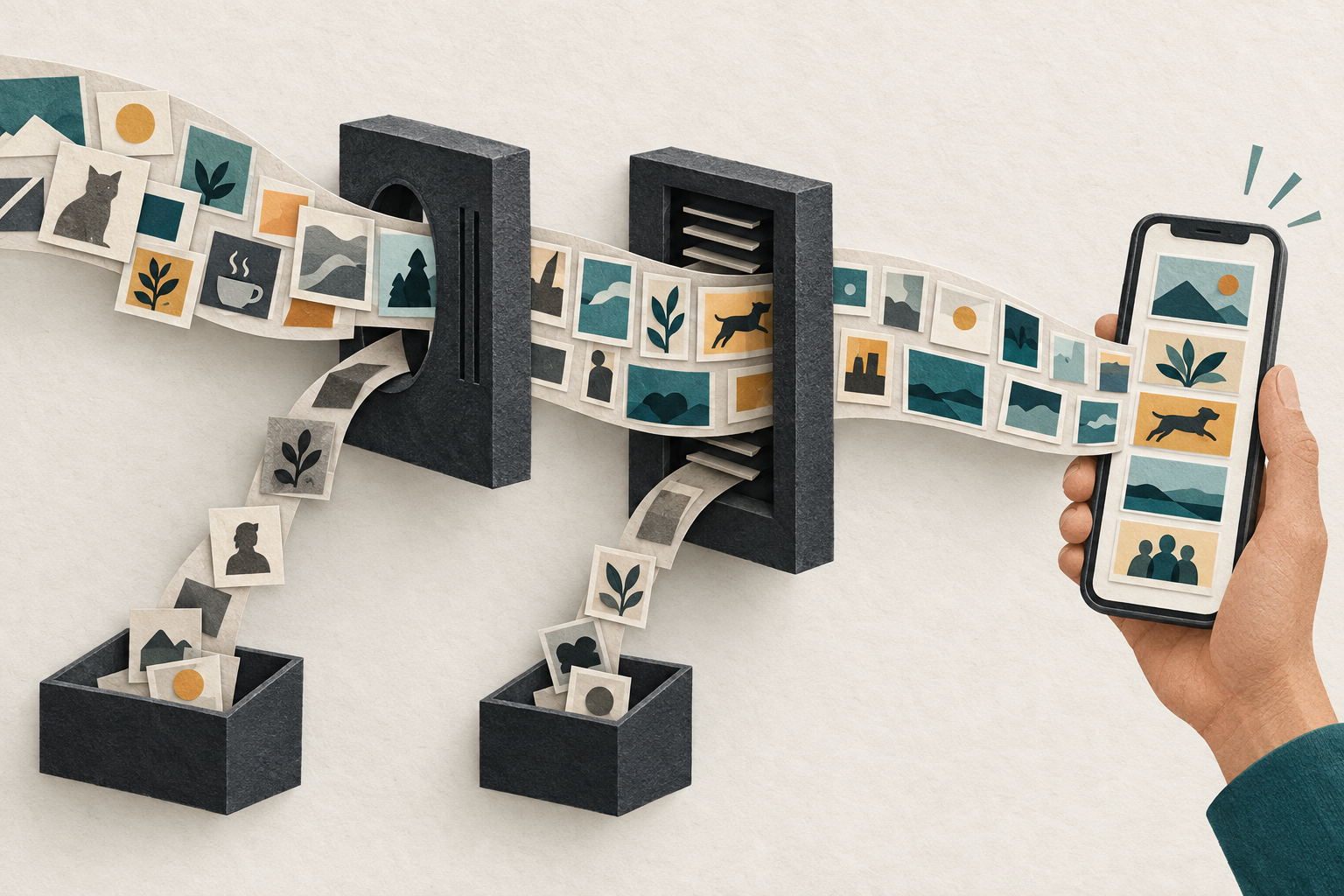
The Australian Government promises a choice over your default feed: personalised recommendations, or friends and creators you follow. Default means the view that opens, rather than another tab you can visit.
Promise, draft, details
This is a policy proposal, not an entitlement already operating on your phone. The exposure draft lets the minister specify user empowerment tools. The detailed requirements still need to be made.
Three separate controls
A Following feed selects accounts. Newest first orders their posts. A default sets your opening view. Those are separate controls. Changing one does not automatically remove advertising or stop every use of personal data.
Choice is useful. Outcomes need evidence.
A United States election study tested chronological feeds on Facebook and Instagram. It changed exposure and activity, without significant changes in measured political attitudes over three months. That cannot predict an Australian outcome.
The second gate
Before posts are ranked, services decide what is available at all. This second gate matters to the broader duty of care. The proposal would require providers to identify and manage foreseeable risks.
A risk the government recognises
The government's impact analysis summary recognises a potential problem: lower risk services could become excessively cautious and moderate more strictly. That is a risk acknowledgement, not proof that the draft has already silenced Australians.
Why the safety case matters
The safety case matters. Harassment, exploitation and harmful design damage lives. Duties focused on service systems can address risks before individual victims complain. The question is whether protection comes with workable checks against unnecessary restrictions.
What the draft actually says
The draft distinguishes serious harms affecting users generally from additional harms affecting children. It uses a reasonably practicable standard. It does not promise a perfectly harmless internet or classify every unwanted opinion as a prohibited harm.
Later rules carry real weight
Later ministerial instruments would determine important implementation details, including specified user tools. Some powers allow harm categories to expand, subject to conditions. Parliamentary scrutiny matters, alongside the final law and actual enforcement.
There are safeguards
The draft includes transparency powers, complaint duties for prescribed services, and a pathway for approved university researchers. It also protects journalists' confidential sources in a particular information gathering provision. Those safeguards belong in the story.
But a safeguard has a scope
But each safeguard has a scope. Complaint requirements and research access need later details. Source protection is not a general journalism exemption. What can an affected user learn, challenge and have independently examined?
What overseas evidence can tell us
European rules provide reasons and appeals for covered moderation decisions, with exemptions. Millions have been reversed after appeals. Those are selected, appealed decisions: not an error rate for every post or a forecast for Australia.
The questions to put on the record
Ask which services and risks are covered, who receives reasons, and what can be challenged. Consultation closes at noon on twenty two September. The department's page does not specify a time zone.
The Solar System you have seen
Now consider Mars. A space image can be a measurement, an estimate of human vision, or a display of information our eyes cannot detect. Each is useful, but they answer different questions.
One scene, three treatments
NASA publishes one Curiosity scene in raw, natural colour and white balanced versions. Natural colour estimates Martian lighting. White balance helps compare rocks under familiar lighting. The ground did not change between treatments.
Raw is not your eye
Raw does not mean an astronaut's unfiltered view. Detectors and filters respond differently from human eyes. Turning measurements into display colours requires decisions. Calibration can make an image more faithful to its stated purpose.
Why white balance is useful
A warm lamp changes a rock's apparent colour. White balancing helps compare materials under different illumination. A useful treatment becomes misleading when its explanation disappears and the image is treated as the planet's universal appearance.
Mars has a history, not one filter
Viking, Pathfinder, the exploration rovers, Phoenix, Curiosity and Perseverance used different cameras and products. Some approximate visible colour; others enhance contrasts. One picture's recipe does not establish what every mission did.
Even a blue sunset has conditions
Martian dust can make the region near the setting Sun look blue. That does not establish a blue daytime sky everywhere. Time, direction and atmospheric conditions belong with any claim about an observer's view.
Venus: a map is not a photograph
Familiar Venus surface maps often come from Magellan radar. Colour can encode elevation or support a reconstruction. An orange radar globe is not a colour photograph proving that the entire surface looks orange.
The surface evidence is limited
Soviet landers returned local views. Parker detected surface glow through the clouds after dark, in red visible light and infrared. Those observations do not establish a global natural colour map.
Pluto: keep both explanations
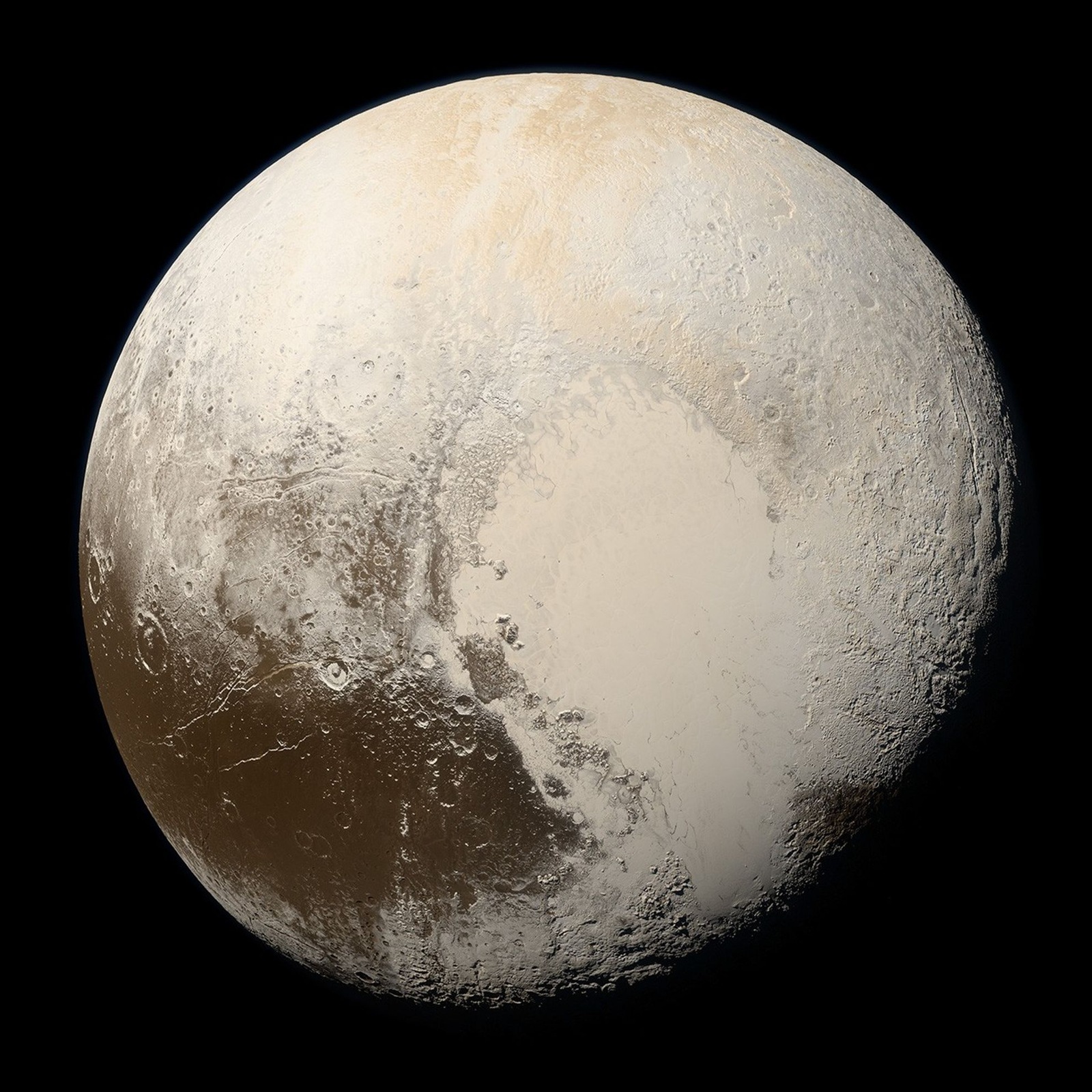
An enhanced Pluto image combines blue, red and infrared measurements to reveal differences. A later calibrated product approximates human visible colour. Keep the labels: they are not rival portraits answering exactly the same question.
Neptune was not always that blue
A twenty twenty four study revisited Uranus and Neptune using spacecraft images and spectra. Both emerge greenish blue, Neptune slightly bluer. The famous intensely blue Neptune was enhanced: the planet had not suddenly changed colour.
A correction needs its own limits
The researchers said enhancement was disclosed but the distinction became less clear over time. Lens has not measured caption loss across every textbook. A processing difference does not prove what everybody was taught.
The Sun beyond human sight
Solar observatories collect ultraviolet light beyond human vision. Display colours separate channels and structures. A golden solar image can be scientifically informative without being a visible colour portrait of the Sun.
Earth and the Moon, too
The two thousand two Blue Marble assembles observations rather than recording one instant. The Moon also appears in false colour mineral maps. Ask what was measured and how the finished picture was constructed.
Not every difference is an edit
Saturn's north pole changed appearance with seasons and atmospheric haze. Different colours do not always mean different editing. Time and physical conditions change the subject. Processing is one explanation to test, not a universal answer.
The moons need their own captions
Europa images can combine encounters and fill gaps. Titan's infrared maps reveal surface information through haze. The other moons have their own instruments and recipes. There is no single rule for moon colours.
Dark worlds can make bright pictures
Contrast stretched comet pictures reveal structure on dark material. Asteroid maps amplify subtle spectral differences. Screen brightness is not a direct measure of surface reflectivity; the display and your visual adaptation also matter.
A better question than real or fake
Ask five questions: which instrument, which wavelengths, when and from where, what processing, and what purpose? That keeps a map, an illustration and an estimate of human vision distinct, without dismissing the science.
Keep the explanation attached.
These stories connect through inspectable decisions, not identical mechanisms. Read the full investigations and compare the labelled scientific images in Issue five at Lens. Then ask our usual question: how do we know?