Issue 007 · Global special · Media evidence
Can you prove a picture is real?
A convincing image is not the same as a verified event. Here is how to check a photo or video, what a file can actually prove, and why the answer matters more as convincing fakes get easier to make.
The short answer · Not established by appearance alone
Not from appearance alone.
You can build a strong case that an image records a particular event. Start with its original source, test its date and place, inspect any available file history, and look for independent evidence. Even then, separate what the image shows from what a caption asks you to believe.
A visible glitch is not a reliable all-purpose fake detector. A missing metadata field is not proof of fabrication. A verified history of edits is useful, but it does not certify that the story told about the image is true. See the verification and provenance sources.
What people might say: “It looks real, so the caption must be right.” This is an illustrative inference, not a measured public statement. The image and the claim need separate checks.
Lens in 8 · Two-host visual episode
Watch the evidence unfold.
A simulated bridge claim, a separate real Coast Guard archive photo, NASA's Mars comparison and original GOFAST footage—one question at a time.
The bridge chat is hypothetical. Conceptual illustrations are labelled; original footage and archival images carry source credits. Inspect the images and source records below.
Listen, follow the checks or see another view
Choose how to read this
Read, listen or follow the question.
The facts do not change. Each view uses the same published sources and leaves the same questions open.
Different viewsSee what each perspective notices—and may miss.
See through another Lens
Which view do you want to understand first?
Each view notices something useful. None is allowed to stand in for the complete evidence.
The viewer
An image can be genuine and its caption can still be wrong.
What this view explainsCheck who first posted it, when and where it was made, and whether the claim fits what is visible.
What it may missA correct caption does not establish everything outside the frame.
A method you can use
Five checks before you share
Pause at the claim
Write down the exact claim before investigating: who or what, where, when, and what the image supposedly proves. A real photo can be paired with a false date or place.
Find the earliest available version
Search the image, distinctive details, and key video frames. Look for a longer clip, the original post and the person or organisation that captured it. An older appearance can expose a recycled image, but no search hit is not proof it is new.
Check place and time
Compare visible signs, buildings, terrain, shadows and weather with independent maps or records. For video, watch the whole sequence and listen for edits. A plausible match is a lead, not confirmation on its own.
Inspect the file history
If the original file is available, inspect metadata and any verified Content Credentials. They can help connect a file to a device or editing history. Missing data does not prove a fake; present data does not prove the caption.
Ask what else supports it
Look for independent recordings, direct witnesses, official records or on-the-ground reporting. State what is established, what remains a claim and what is still unknown. Do not turn an AI-detector score into a verdict.
This is a reporting workflow, not a promise that every case can be solved. The Associated Press describes image and video verification as a combination of searches, frame inspection, location checks and contact with sources.
What the evidence actually says
Two images, two different traps
Same Mars. Different light.
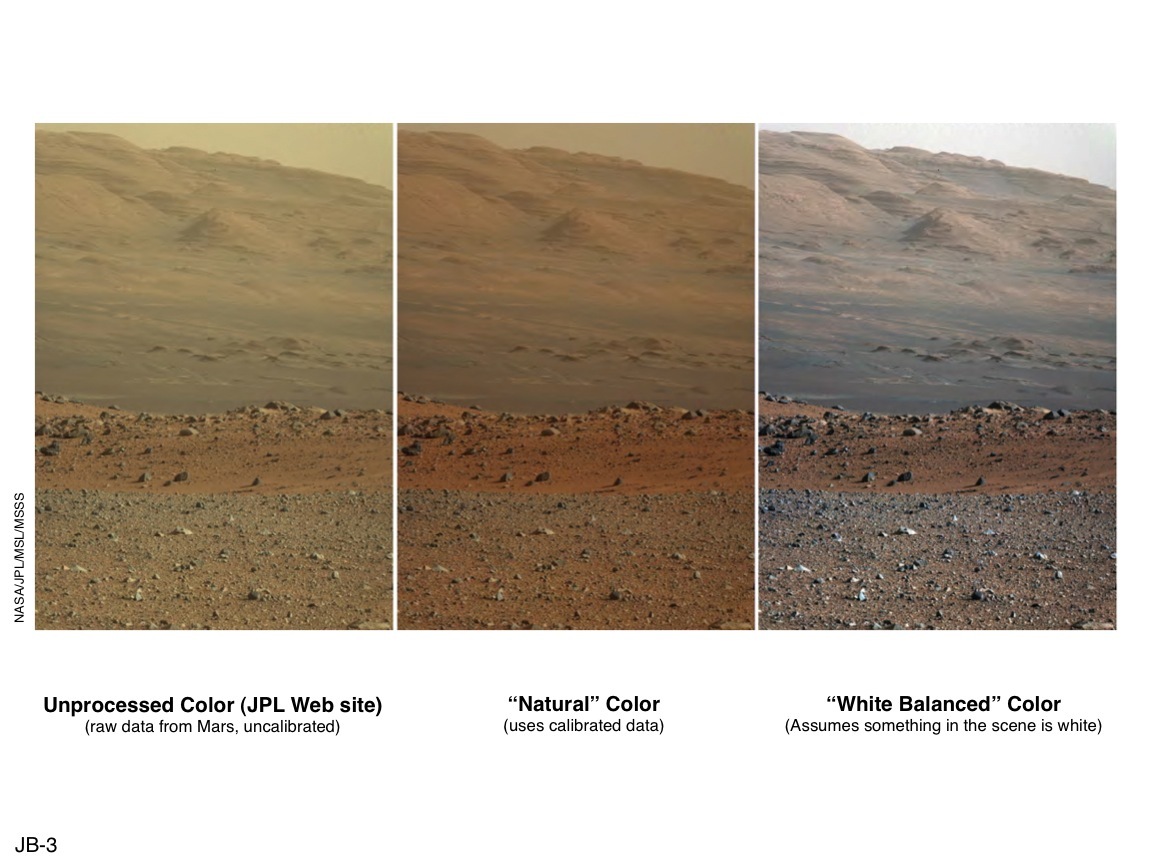
The raw, natural-colour and white-balanced views do not show three different places. NASA explains that the white-balanced version simulates how the scene might look under Earth-like lighting. The processing is disclosed and useful for comparison; it is not evidence that the terrain was invented.
The lesson: ask what a colour treatment is for and whether it is labelled. Lighting and processing can change perception without changing the underlying scene. Explore the full Solar System investigation →
A UAP image needs a chain of context.
In Lens's UAP-file review, one featured 2002 airborne-triangle image was explicitly labelled a digital rendering in the source archive. It illustrates a reported scene; it is not a photograph of that encounter. A separate historical GoFast clip shows why apparent speed can change with camera motion and parallax. Neither observation identifies an unknown object.
For any release, ask for the original file, capture time, sensor information, distance, sequence and independent corroboration where available. A missing piece limits what can be concluded; it does not prove a hoax or an extraordinary explanation. Read the UAP evidence review →
File history is one layer
What do Content Credentials prove?
A valid credential can help show who or what signed a file and whether parts of its recorded history were changed after signing. The C2PA specification is explicit about the boundary: provenance is not a truth machine. A genuine recording can be miscaptioned; a credential can be lost when a platform or person exports or shares a copy.
AI-detection tools may provide clues, but performance varies with new generators, edits and the material being tested. NIST is evaluating those tools rather than treating one score as a definitive public test.
What this could change
The next problem may be the speed of doubt.
Generation tools are improving, and video is part of that advance. That supports concern about more persuasive false or miscaptioned material, but it does not tell us how many false images people will see in 2030. The Stanford AI Index tracks technical capability, not the prevalence of deception in the wild.
There are two plausible paths. If provenance survives sharing and newsrooms and platforms make original context easy to inspect, false claims can be challenged faster. If stripped context, rapid reposting and confident detector claims outrun verification, real evidence may be dismissed alongside fakes. These are conditional projections, not measured forecasts.
Useful measures to watch are how often original files and context survive publication, how new detectors perform outside their test sets, how quickly a false claim is corrected, and whether readers can follow the evidence themselves. Concern about false news in the Reuters Institute's surveyed markets is a measure of concern—not a count of fake images.
One useful question
When a striking image arrives, ask: “What would I need to know, beyond this frame, to believe the claim attached to it?” If the answer is missing, say “not established yet”—not “definitely fake” or “definitely real.”
Inspect the basis
Sources and limits
Why Lens says this
The finding
Appearance alone cannot establish the event, time, place or meaning claimed by a caption.
Direct record
NASA labels three treatments of the same Curiosity scene. The C2PA explainer distinguishes provenance from factual truth. The earlier UAP archive review identifies a labelled rendering, and Senate testimony describes parallax as a limit on apparent motion.
Lens inference
A stronger verification combines original context, file history where available and independent evidence. No single cue settles every case.
Contrary evidence and limits
A signed provenance chain can be strong evidence of a file's recorded history; a clear unedited sequence can also support a claim. Neither eliminates the need to test the claim itself. The UAP catalogue was not freshly re-audited on 24 September.
Search scope
Lens checked the listed NASA, AP, C2PA, NIST, Senate, Stanford and Reuters Institute records. This was not a systematic test of every image detector, platform or UAP attachment.
What would change this answer
A newly available original file, independent event records, stronger detector evaluation or material changes to provenance retention could change a particular verdict or the practical advice.
AI-assisted research and writing. Evidence checked 24 September 2026. This receipt documents the published basis, not hidden model reasoning.
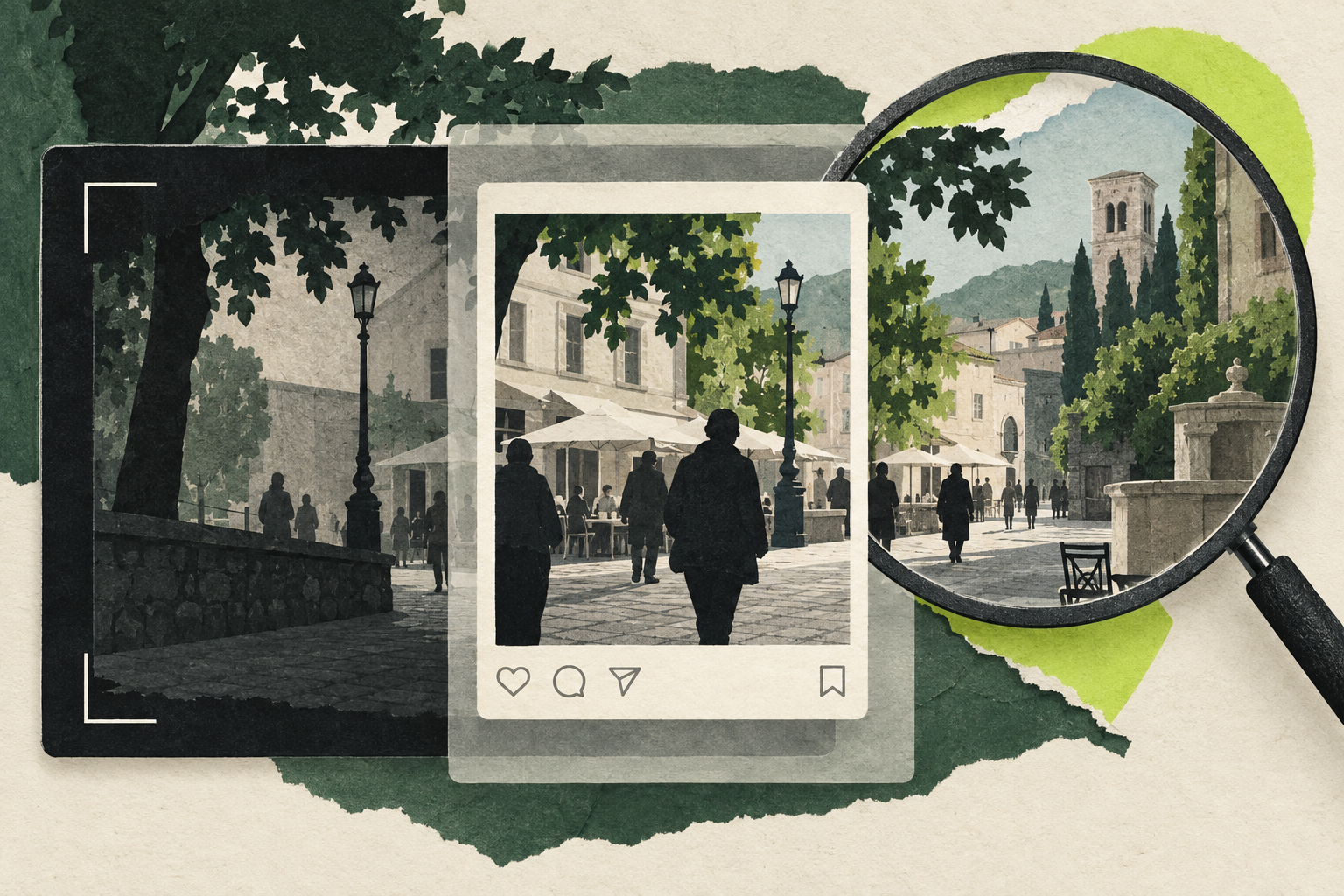
Lens checked these primary records and reporting-method sources on 24 September 2026 except where an earlier date is stated. The NASA comparison image is the existing traceable copy recorded in the Solar System evidence trail. The UAP catalogue was inspected for the earlier Lens review on 18 September; a direct fetch failed on 24 September, so this story does not claim a fresh catalogue re-audit. The hero is conceptual artwork, not source material.
What would change this account: reliable evidence of widespread provenance retention or loss, stronger independent detector evaluations, or new primary information about an example discussed here. Lens will date material corrections and updates.
Free Lens updates
Understand the story. Get the next Lens.
Our free weekly email brings you the latest Lens reporting and what changed.