Issue 002 · Story 2 · Consumer lawOne story. Many lenses.
Same evidence. Different perspective.
Viewing through
Whole story
Start with the shortest supported answer, then follow the evidence and the limits together.
What comes into focusIt keeps the claim, its source and the point where certainty ends in one view.
What this view may missA specialist Lens can make one practical consequence easier to see.
Changing the Lens changes what comes into focus. It never changes the evidence underneath.
Issue 002 Story 2 · Consumer law
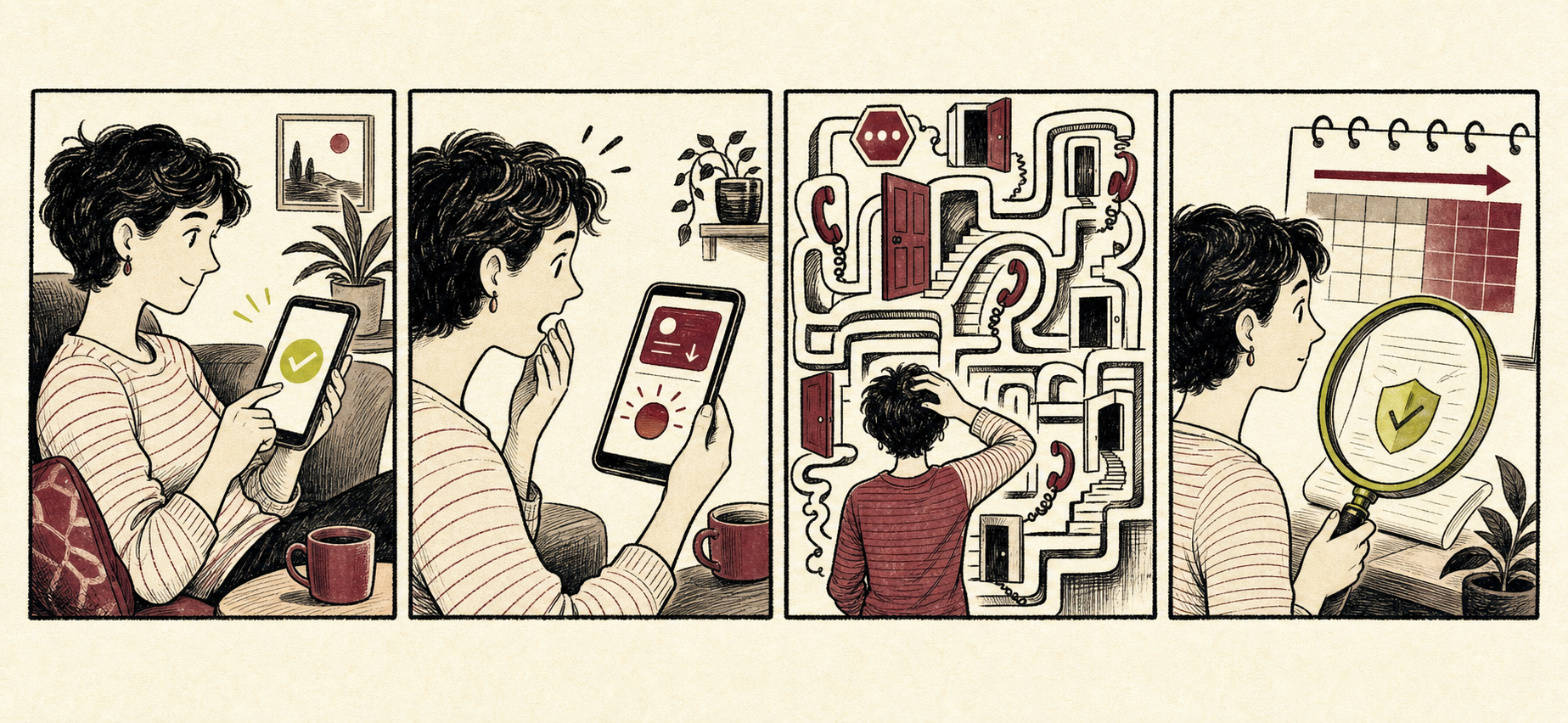
Australia banned subscription traps. Can you demand an easy cancellation now?
The law has passed. The protection has not started. That one-year gap is the part most headlines leave behind.
By Lens with Sense EnginePublished 16 August 2026About five minutes
Watch the relevant chapter from Lens in 8, then inspect the evidence below.
What people heard
Australia banned subscription traps, so every service must offer easy online cancellation now.
True, but not yet in force
Can you rely on that new protection today?
Short answer. The Act passed, but its subscription protections commence on 1 July 2027. Existing consumer law may still apply through a different legal path.
Choose how to read this
Read, listen or follow the question.
The facts do not change. Each view uses the same published sources and leaves the same questions open.
The new law tackles the imbalance—but the commencement date decides when its new rights can actually be used.
What the future rule says
Online entry can require an online exit.
From commencement, a covered supplier must provide a way to end the subscription. Every exit method it provides must be easy to find, straightforward and require only steps reasonably necessary to end the contract and protect the subscriber.
If the subscriber entered the contract online—or the supplier offers online entry for the same kind of service—one cancellation method must also be online.
That is stronger and more precise than a slogan such as “one-click cancellation.” The Act does not use that phrase, and later regulations and court decisions may determine how the standard works in different settings.
New protection later does not mean no protection now.
Existing Australian Consumer Law already prohibits misleading conduct. It is a different legal route and depends on what happened.
Existing law
Was the price or sign-up misleading?
In July, the Federal Court ordered JustAnswer to pay A$10 million after it admitted misleading pricing representations that left consumers with unexpected ongoing fees. That case did not depend on the new Act having commenced.
Future subscription rule
Was the exit easy to find and straightforward?
From July 2027, section 48F gives the regulator a subscription-specific exit standard for covered contracts. Lens cannot apply it retrospectively to a present dispute.
From commencement, section 48F requires each provided exit method for a covered subscription to be easy to find, straightforward and limited to steps reasonably necessary to end the contract and protect the subscriber.
The subscription provisions apply to contracts entered from commencement and to earlier contracts when they are renewed, extended, continued or varied on or after commencement, subject to the Act's terms.
Parts of the ongoing-information regime and exceptions depend on regulations that can prescribe contract classes, information, timing, manner and exceptions.
Competition and Consumer Amendment (Unfair Trading Practices) Act 2026
In July 2026 the Federal Court ordered JustAnswer to pay A$10 million after admissions involving misleading subscription-pricing representations under existing Australian Consumer Law.
The admitted records cannot determine whether a current cancellation path breaches existing law, whether the new provisions will cover a particular contract, or what remedy a particular subscriber should receive.
Lens assessment
Lens assessment
How we checked it Read the reporting notes
The question
Distinguish a law that has received assent from protections that have commenced, then understand which subscriptions and cancellation paths the new provisions cover.
What we checked
The as-made Commonwealth Act, parliamentary passage record and one ACCC enforcement record available through 16 August 2026. Regulations, court interpretation after commencement and a person's individual contract are outside the established boundary.
Best-supported answer
Not under the new 2026 Act yet. Parliament passed it and it received assent, but the whole Act commences on 1 July 2027. From commencement, covered subscription exit methods must be easy to find, straightforward and limited to reasonably necessary steps; an online exit must be available when the subscription was entered online or the supplier offers online entry for the same kind of service.
Why we told it this way
The question turns on a legal timeline, coverage conditions and a practical cancellation mechanism. The records support a short sequence and scope comparison, but not advice about an individual dispute.
An editor remains responsible. Sense separated passage, assent, commencement, future coverage and existing law. Lens remains responsible for the wording, source admission and corrections; this story is general information, not legal advice.
Issue 002 record Three primary or official records reviewed · Sense run opened before prose · passage, assent and commencement kept separate · original comic labelled · published 16 August 2026
Possible effects · We cannot say how likely
What this could change
They could make covered cancellation paths easier to find and use from 1 July 2027, while regulations, contract timing and later court interpretation will determine how broadly and consistently that protection works.
Documented action
The Act sets a future standard for findable, straightforward exit methods and requires an online exit in specified online-entry cases from commencement.
What Lens thinks may follow
Covered suppliers could redesign cancellation interfaces, records and retention practices before commencement to reduce the risk that their exit process breaches the new standard.
Where the connection stopsThe Act establishes future duties and timing; it does not decide a present individual dispute or reveal how every supplier will implement the standard.
What this depends on—and other possibilities
This depends on
The relevant contract is covered when the provisions commence or later attach.
Regulations and court interpretation preserve a practically meaningful exit standard.
Other explanations
Suppliers may comply formally while retaining friction elsewhere in the customer journey.
Existing consumer law and reputational pressure may drive some changes before commencement.
How different interpretations could affect what happens next
How people may respond
How the story itself could change what happens
A headline saying subscription traps were banned could change consumer demands and supplier design before the new protections commence.
What the evidence does not showThe Act and commencement date are established; present consumer expectations and supplier behaviour are not measured.
One possible path
The future standard becomes an expected norm
Not enough evidence yet
How it is told
The enacted easy-exit rule is explained alongside its 2027 commencement.
What people may take from it
Consumers and suppliers may treat straightforward cancellation as the coming design baseline.
Where attention could turn
Attention shifts toward whether products are being redesigned before commencement.
What people may do
Suppliers, consumers and regulators: Prepare systems, guidance and enforcement for the new standard.
What could change
Cancellation design may change before the legal duty starts.
What we know has changedWe have not established that this possible change has happened.
What this does not showEarly redesign would not make the statutory right currently enforceable.
Why we are cautious
Why we cannot tell yet
This is the first time Lens has mapped this path. We have no later evidence showing whether it is happening more, less or about the same.
Signs that would support this path
Supplier interface changes, regulator guidance and early enforcement identify the steps considered reasonably necessary.
Signs that would weaken it
Key contract classes are excluded.
Early interpretation permits substantial avoidable friction.
This depends on
The relevant contract is covered when the provisions commence or later attach.
Regulations and court interpretation preserve a practically meaningful exit standard.
One possible path
Assent is interpreted as immediate individual entitlement
Not enough evidence yet
How it is told
The ban headline is more salient than commencement and contract-transition rules.
What people may take from it
Consumers may demand a right the new provision does not yet supply to their contract.
Where attention could turn
Complaints and frustration may rise around the timing boundary.
What people may do
Consumers, businesses and advisers: Dispute cancellation paths under existing law or clarify when the new rule applies.
What could change
Expectations can change before legal coverage commits.
What we know has changedWe have not established that this possible change has happened.
What this does not showA difficult cancellation may still engage existing law, but not automatically the future provision.
Why we are cautious
Why we cannot tell yet
This is the first time Lens has mapped this path. We have no later evidence showing whether it is happening more, less or about the same.
Signs that would support this path
Regulations and guidance define contract classes, exceptions and treatment of pre-commencement agreements.
Signs that would weaken it
Coverage rules prove broad and uniform in practice.
Suppliers apply the new standard to all customers regardless of minimum legal coverage.
This depends on
The relevant contract is covered when the provisions commence or later attach.
Regulations and court interpretation preserve a practically meaningful exit standard.
Two ways this could develop
This depends on what happens next
Easy exits become a normal product requirement
If the provisions commence as scheduled and regulators or courts apply the standard to meaningful cancellation friction
Then covered services could offer clearer, shorter exit paths and retain better evidence that a subscriber successfully cancelled.
What to watch—and what would weaken it
Supplier interface changes, regulator guidance and early enforcement identify the steps considered reasonably necessary.ACCC guidance, court decisions and covered suppliers' cancellation flows after commencement.
Would weaken this: Key contract classes are excluded. Early interpretation permits substantial avoidable friction.
Scope: Covered Australian consumer and qualifying small-business subscription contracts. Horizon: From 1 July 2027 and the first enforcement cycle.
This depends on what happens next
Protection varies by contract and implementation
If regulations, transition rules or factual differences place many existing subscriptions outside the same practical pathway
Then some subscribers could receive straightforward exits while others still need existing consumer-law or dispute-resolution routes.
What to watch—and what would weaken it
Regulations and guidance define contract classes, exceptions and treatment of pre-commencement agreements.The Federal Register of Legislation and ACCC implementation guidance.
Would weaken this: Coverage rules prove broad and uniform in practice. Suppliers apply the new standard to all customers regardless of minimum legal coverage.
Scope: Coverage and implementation differences, not a prediction about any named supplier. Horizon: The commencement and transition period.
How do we know?Inspect the evidence and its limits
Evidence used in this assessment
Federal Register of Legislation · 6 July 2026Competition and Consumer Amendment (Unfair Trading Practices) Act 2026
The Act received assent on 6 July 2026, but its commencement table provides that the whole Act starts on 1 July 2027.
Open evidence ↗Australian Competition and Consumer Commission · date unknownJustAnswer misleading-pricing penalty announcement
In July 2026 the Federal Court ordered JustAnswer to pay A$10 million after admissions involving misleading subscription-pricing representations under existing Australian Consumer Law.