Defence policy
Credible retaliation can deter attack.
What this view explainsWhy governments value an allied nuclear guarantee.
What it may missA counterfactual is difficult to prove, and risk is borne unevenly.
The weekly paper
for curious people
See the connections.
Understand the consequences.
Swipe to see more sections →
Security · Issue 010
Japan's alliance, nuclear possession, hosting and the consequences left by testing are different questions.
Different choices, with different consequences
No. Japan's government relies on United States extended deterrence, but a 2026 survey found much less support for Japan owning nuclear weapons or hosting American ones than for strengthening the alliance. Those figures do not prove whether deterrence works, and they do not answer who carries the consequences if weapons are used or testing damage remains.
Japan relies on American nuclear protection, so support for the alliance means support for nuclear weapons close to home.
The question: Are protection, possession and hosting the same choice?
Choose how to read this
The facts do not change. Each view uses the same published sources and leaves the same questions open.
See through another Lens
Each view notices something useful. None is allowed to stand in for the complete evidence.
Defence policy
Credible retaliation can deter attack.
What this view explainsWhy governments value an allied nuclear guarantee.
What it may missA counterfactual is difficult to prove, and risk is borne unevenly.
Start by separating the choices
Japan's 2026 defence white paper says the country receives United States protection that includes nuclear capabilities. That is the government's policy. It is not proof that a weapon prevented a particular attack.
The University of Tokyo survey asked different questions. Combined support for strengthening the American alliance was 45.6%. Support for Japan developing nuclear weapons was 18.9%; support for hosting American weapons was 19.3%. Opposition to the last two proposals was 57.2% and 53.7%. The survey cannot tell us whether the same respondents chose each answer, or why.
NATO says nuclear weapons deter attack because an opponent believes they could be used. Nagasaki's mayor starts at the other end of that logic: a leader may decide to use them, so a security policy built on that possibility is dangerous and fragile.
Both are stated positions. Neither supplies the missing counterfactual—what would have happened without the weapons. That is why a claim that deterrence 'worked' needs more than the absence of an attack.
Seoul National University's institute reported 61.1% support for South Korean nuclear possession. The institute also warned that general support does not establish willingness to accept economic or diplomatic costs.
That survey used in-person interviews with 1,200 adults. The Japanese survey was online and used a different sample and question set. Putting the percentages side by side can raise a useful question, but it cannot create a league table of national enthusiasm.
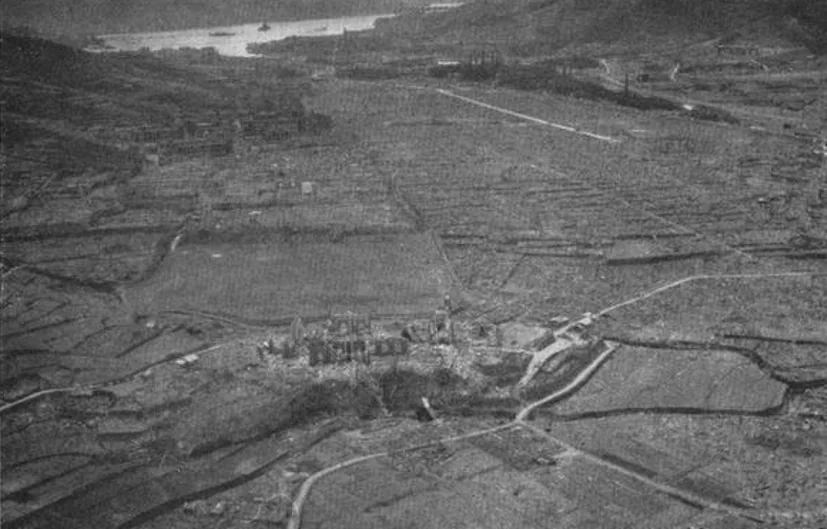
British nuclear testing in Australia included 12 atomic detonations from 1952 to 1963. ARPANSA says its 2025 Maralinga survey found no significant change in radioactivity and that earlier dose assessments still apply for the uses they cover.
That conclusion has a boundary. The public summary does not publish the underlying measurements by location, and ARPANSA still describes a precautionary restriction on permanent occupancy near Taranaki. A current scoped safety assessment does not erase past harm or the work of managing Country.
Possible effects · We cannot say how likely
Moving a nuclear consequence closer changes what evidence a decision needs. A national alliance poll would not establish local consent. The decision would need a named place, authority, safety case, obligations and a way for the host community to be heard. Survey answers and official statements would need checking again. A proposal with cost, location and command arrangements may produce a different answer from a general question. Location-level monitoring and the full land-use boundaries would sharpen the current assessment. Historic testimony and current measurements answer different questions; neither cancels the other.
No. Japan's government relies on United States extended deterrence, but a 2026 survey found much less support for Japan owning nuclear weapons or hosting American ones than for strengthening the alliance. Those figures do not prove whether deterrence works, and they do not answer who carries the consequences if weapons are used or testing damage remains.
Moving a nuclear consequence closer changes what evidence a decision needs.
Where the connection stopsThe surveys do not show why an individual chose an answer or how support changes when a location, cost and command arrangement are specified. The public ARPANSA summary does not publish the 2025 measurements by location.
How people may respond
Separating protection, possession, hosting and testing aftermath could change which public question a future nuclear proposal must answer.
What the evidence does not showThe records do not measure how this presentation changes support or establish the net safety effect of a future deployment.
The story separates a general alliance preference from a decision to host weapons in a named place.
Readers and decision-makers may ask for a local authority, safety case and consent process rather than treating a national poll as the answer.
Attention moves toward the people and place carrying the decision.
Governments and host communities: Specify the proposal and the process by which affected communities can assess it.
A future decision could require more local evidence and accountability.
What we know has changedWe have not established that this possible change has happened.
What this does not showA clearer question does not establish what a host community would decide.
This is the first time Lens has mapped this path. We have no later evidence showing whether it is happening more, less or about the same.
Current policy statements and survey categories are presented as dated records.
A concrete proposal with cost, location and command arrangements may be interpreted differently from a general question.
Attention turns to current wording, methods and specified trade-offs.
Researchers, governments and the public: Recheck opinion and risk assessments against the actual proposal.
The public evidence base could become more specific.
What we know has changedWe have not established that this possible change has happened.
What this does not showA later survey still would not prove the counterfactual effect of deterrence.
This is the first time Lens has mapped this path. We have no later evidence showing whether it is happening more, less or about the same.
If a national alliance poll would not establish local consent
Then A national alliance poll would not establish local consent. The decision would need a named place, authority, safety case, obligations and a way for the host community to be heard.
Would weaken this: The surveys do not show why an individual chose an answer or how support changes when a location, cost and command arrangement are specified.
Scope: Japan's alliance, nuclear possession, hosting and the consequences left by testing are different questions. Horizon: The next policy, reporting or research update.
If survey answers and official statements would need checking again
Then Survey answers and official statements would need checking again. A proposal with cost, location and command arrangements may produce a different answer from a general question.
Would weaken this: The public ARPANSA summary does not publish the 2025 measurements by location.
Scope: Japan's alliance, nuclear possession, hosting and the consequences left by testing are different questions. Horizon: The next policy, reporting or research update.
Japan's stated policy relies on United States extended deterrence, including nuclear capabilities.
Open evidence ↗An August online survey of 2,009 Japanese adults separately measured support for the alliance, possession and hosting.
Open evidence ↗Mayor Shiro Suzuki argued that deterrence is dangerous and fragile and called for security not reliant on nuclear weapons.
Open evidence ↗NATO states the institutional case for deterrence and the need for political control, safety and effectiveness.
Open evidence ↗The institute reported 61.1% support for South Korean nuclear possession and cautioned that general support does not establish acceptance of costs.
Open evidence ↗ARPANSA reported no significant change in surveyed radioactivity and retained the scope of earlier land-use assessments.
Open evidence ↗The official history records 12 atomic detonations and continuing permanent-occupancy restrictions near Taranaki.
Open evidence ↗What could change this assessment?
No. Japan's government relies on United States extended deterrence, but a 2026 survey found much less support for Japan owning nuclear weapons or hosting American ones than for strengthening the alliance. Those figures do not prove whether deterrence works, and they do not answer who carries the consequences if weapons are used or testing damage remains.
Japan's stated policy relies on United States extended deterrence, including nuclear capabilities. An August online survey of 2,009 Japanese adults separately measured support for the alliance, possession and hosting. Mayor Shiro Suzuki argued that deterrence is dangerous and fragile and called for security not reliant on nuclear weapons. NATO states the institutional case for deterrence and the need for political control, safety and effectiveness. The institute reported 61.1% support for South Korean nuclear possession and cautioned that general support does not establish acceptance of costs. ARPANSA reported no significant change in surveyed radioactivity and retained the scope of earlier land-use assessments. The official history records 12 atomic detonations and continuing permanent-occupancy restrictions near Taranaki.
The records support the distinction expressed in the answer, but not a claim about every person, place or future outcome.
The surveys do not show why an individual chose an answer or how support changes when a location, cost and command arrangement are specified. The public ARPANSA summary does not publish the 2025 measurements by location.
Original government, institutional and peer-reviewed records listed on this page. Secondary reporting was not used to establish the central answer.
Last checked 2026-10-10.
Japan's stated policy relies on United States extended deterrence, including nuclear capabilities.
Japan Ministry of Defense · 2026 · Checked 10 October 2026An August online survey of 2,009 Japanese adults separately measured support for the alliance, possession and hosting.
University of Tokyo ROLES · 19 September 2026 · Checked 10 October 2026Mayor Shiro Suzuki argued that deterrence is dangerous and fragile and called for security not reliant on nuclear weapons.
City of Nagasaki · 9 August 2026 · Checked 10 October 2026NATO states the institutional case for deterrence and the need for political control, safety and effectiveness.
NATO · 25 September 2026 · Checked 10 October 2026The institute reported 61.1% support for South Korean nuclear possession and cautioned that general support does not establish acceptance of costs.
Seoul National University IPUS · 30 September 2026 · Checked 10 October 2026ARPANSA reported no significant change in surveyed radioactivity and retained the scope of earlier land-use assessments.
ARPANSA · 2026 · Checked 10 October 2026The official history records 12 atomic detonations and continuing permanent-occupancy restrictions near Taranaki.
ARPANSA · Checked 10 October 2026 · Checked 10 October 2026Free Lens updates
Our free weekly email brings you the latest Lens reporting and what changed.