Adults without known cardiovascular disease
A routine cardiovascular risk assessment is recommended within this age range.
The weekly paper
for curious people
See the connections.
Understand the consequences.
Swipe to see more sections →

Health Lens · Heart health
A risk check can reveal a pattern worth acting on. It cannot tell you that a heart attack is certain—or when one will occur.
The shortest answer
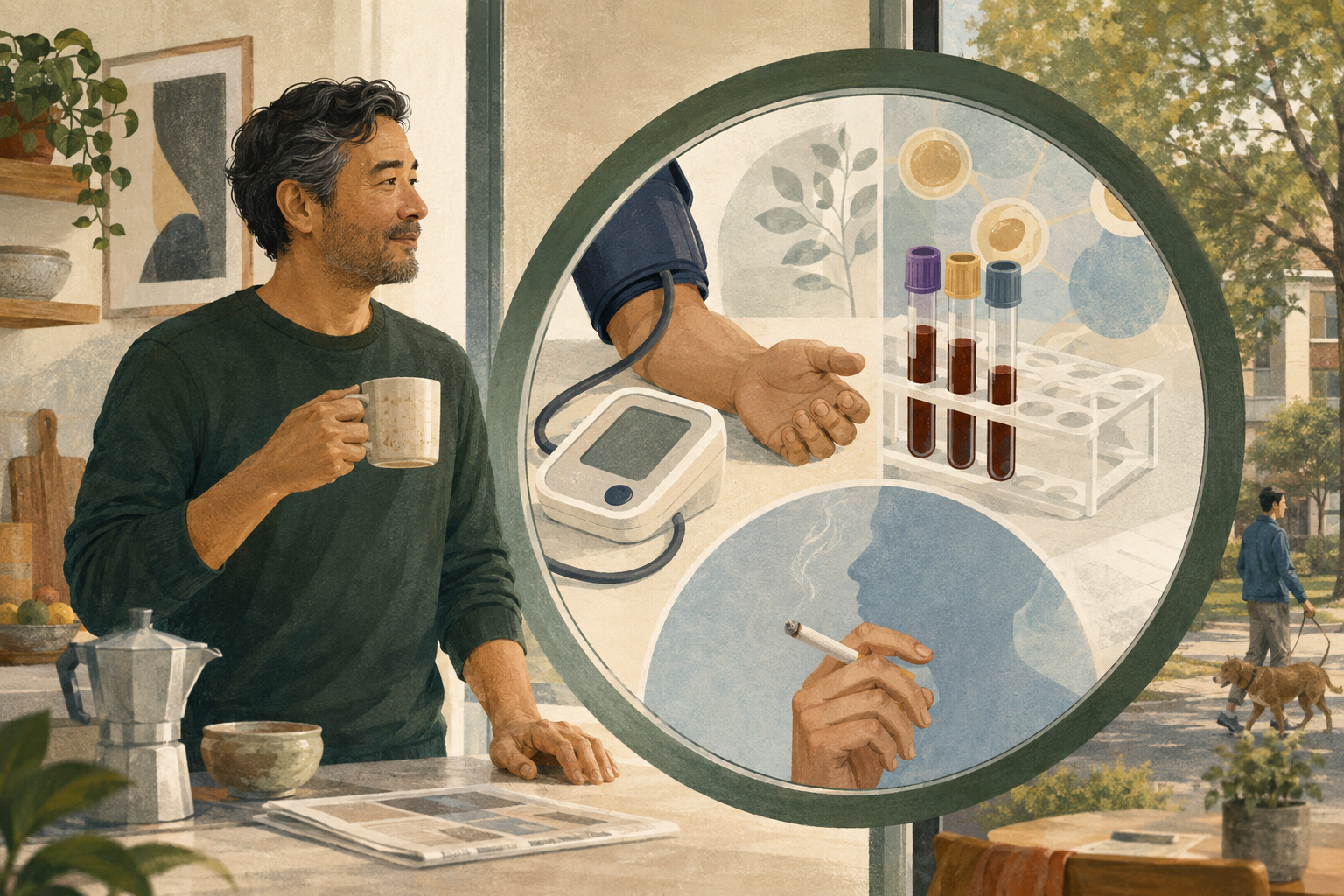
A Heart Health Check brings several established risk factors together to estimate a person’s chance of a cardiovascular event over the next five years. It is designed for people without known cardiovascular disease who meet the guideline’s age and risk criteria.
The result is a probability used to guide a conversation about prevention. It is not a diagnosis, a guarantee, or a countdown.
What the check does
The Australian calculator uses clinical information including age, sex, smoking, systolic blood pressure and cholesterol. A clinician also considers conditions and circumstances that can change how the result should be interpreted.
Who the national guidance covers
A routine cardiovascular risk assessment is recommended within this age range.
Assessment starts earlier because diabetes materially changes cardiovascular risk.
Assessment starts earlier; individual risk-factor checks may begin earlier again.
These are population guidelines, not a personal order. Your clinician can tell you whether the assessment applies to you and how often it should be repeated.

No symptoms
A scheduled appointment can assess risk, check measurements and decide whether changes to treatment or daily habits would be useful.
Possible symptoms
Chest pain or discomfort, breathlessness, nausea, dizziness, a cold sweat, or pain in the arm, jaw, back or shoulder may be warning signs.
Call Triple Zero (000) immediately.What the result can change
Depending on the result and the person, the next conversation may cover blood pressure, cholesterol, smoking, physical activity, nutrition, medicines or further clinical assessment.
Lower risk does not mean zero risk. Higher risk does not mean an event is inevitable. The estimate is useful because prevention can respond to probability without pretending probability is certainty.
Show me the evidence
Checked 4 September 2026 General information only. Clinical guidance and eligibility can change; seek individual advice from a qualified health professional.
Free Lens updates
Our free weekly email brings you the latest Lens reporting and what changed.