Current editionIndependent · Evidence led · Published in AustraliaStand Here · 10 October 2026

The weekly paper
for curious people

See the connections.
Understand the consequences.

Free email via Substack →

Swipe to see more sections →

Work · Issue 010

When AI saves time, who gets the hour?

Workplace AI can raise task productivity without automatically raising pay or reducing hours.

Productivity rose in one setting; broad worker gains were not established

In a customer-support study, generative AI raised issues resolved per hour by 15% on average. In Denmark, workers reported that most saved time went into other work tasks, while administrative records showed no measurable average change in earnings or recorded hours through 2024. Faster work is real in some tasks; who benefits is a separate question.

What people heard

If generative AI makes a worker faster, the worker gets time back—or the employer gets a matching productivity windfall.

The question: Where did the saved time actually go?

Choose how to read this

Read, listen or follow the question.

The facts do not change. Each view uses the same published sources and leaves the same questions open.

AaReadGo straight to the best-supported answer.
Different viewsSee what each perspective notices—and may miss.

See through another Lens

Which view do you want to understand first?

Each view notices something useful. None is allowed to stand in for the complete evidence.

Worker

If the tool saves time, I may reasonably ask whether workload, hours or pay changes.

What this view explainsWhy productivity alone is not a complete worker outcome.

What it may missA worker can value help even without a recorded hour reduction.

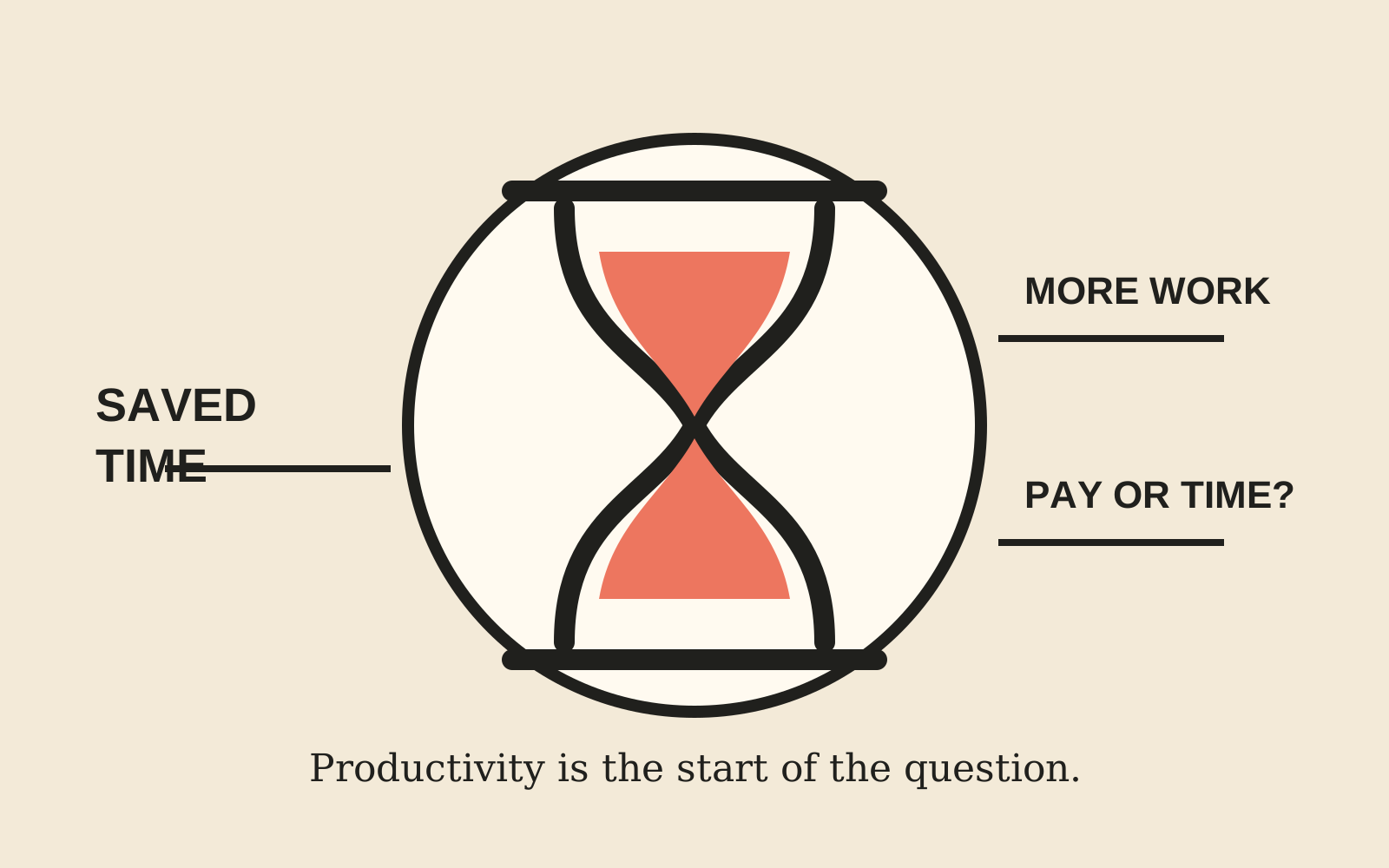
An hourglass divides one saved hour between more work, pay and free time
Lens diagram · Based on the cited workplace studies

Two studies, two questions

Faster at a task is not the same as richer or freer

The customer-support study followed 5,172 agents. Access to a generative-AI assistant increased issues resolved per hour by 15% on average, with the largest gains among less experienced and lower-skilled workers.

That is a result in one operational setting. The researchers could not observe wages or overall labour demand, so the productivity number cannot tell us who received the value.

The saved hour mostly went back to work

The Danish research combined late-2024 surveys of about 25,000 workers with administrative records. It found no measurable average effect on earnings or recorded hours and could rule out average effects larger than about 2% after two years.

In the survey appendix, about 80% of saved time was redirected to other work tasks. Fewer than 10% reported more breaks or leisure, about a quarter spent more time on the same tasks, and only 3–7% reported higher earnings. These are reported allocations, not a time-and-motion audit.

The important number may be hiding inside the average

Both studies show uneven effects. A tool can help a novice more than an expert, change some occupations before others, or turn saved time into higher output without changing scheduled hours.

The evidence does not justify saying employers captured every gain. It does justify asking for records that connect task time, output, hours and pay rather than treating 'productivity' as the answer.

Possible effects · We cannot say how likely

What this could change

The bargaining question begins after the stopwatch stops. Saved time may become more output, different tasks or smaller teams. Job design and staffing records—not a demonstration of the tool—will show which change occurred. Pay, shorter hours, autonomy or reduced workload should become visible in contracts, payroll, schedules or credible worker surveys. None follows automatically from faster task completion. Large gains for some workers and losses for others can cancel out. Future studies need occupational and distributional results, not only an economy-wide mean.

Documented action

In a customer-support study, generative AI raised issues resolved per hour by 15% on average. In Denmark, workers reported that most saved time went into other work tasks, while administrative records showed no measurable average change in earnings or recorded hours through 2024. Faster work is real in some tasks; who benefits is a separate question.

What Lens thinks may follow

The bargaining question begins after the stopwatch stops.

Where the connection stopsThe studies do not measure every change in work quality, stress or bargaining power. Average effects may hide different results by occupation, firm and worker.

What this depends on—and other possibilities

This depends on

  • Saved time may become more output, different tasks or smaller teams. Job design and staffing records—not a demonstration of the tool—will show which change occurred.

Other explanations

  • Large gains for some workers and losses for others can cancel out. Future studies need occupational and distributional results, not only an economy-wide mean.
How different interpretations could affect what happens next

How people may respond

How the story itself could change what happens

Treating output, hours, pay and work experience as separate ledgers could change how firms and workers negotiate AI productivity gains.

What the evidence does not showThe studies do not measure every workplace or prove who captured every gain.

One possible path

Work is redesigned around faster task completion

Not enough evidence yet
  1. How it is told

    The story presents a task productivity result without converting it into a wage or employment result.

  2. What people may take from it

    Firms and workers may ask whether saved time becomes output, different tasks or staffing change.

  3. Where attention could turn

    Attention moves to job design and distribution rather than the demonstration alone.

  4. What people may do

    Employers and workers: Record task, staffing, workload and quality changes after adoption.

  5. What could change

    Work design could change even while average scheduled hours remain stable.

What we know has changedWe have not established that this possible change has happened.

What this does not showA redesign would not establish that all workers benefit or lose.

Why we are cautious
Why we cannot tell yet

This is the first time Lens has mapped this path. We have no later evidence showing whether it is happening more, less or about the same.

Signs that would support this path
  • New payroll, hours and job-transition evidence that follows workers and firms after adoption.
Signs that would weaken it
  • The studies do not measure every change in work quality, stress or bargaining power.
This depends on
  • Saved time may become more output, different tasks or smaller teams. Job design and staffing records—not a demonstration of the tool—will show which change occurred.
One possible path

Worker gains are required to appear in worker records

Not enough evidence yet
  1. How it is told

    The story names contracts, payroll, schedules and credible surveys as the places a benefit would become visible.

  2. What people may take from it

    Workers and representatives may test a productivity claim against pay, autonomy, workload or shorter hours.

  3. Where attention could turn

    Attention shifts from capability to distribution.

  4. What people may do

    Workers, employers and bargaining institutions: Negotiate and measure the form in which gains are shared.

  5. What could change

    A documented worker benefit could replace an assumed one.

What we know has changedWe have not established that this possible change has happened.

What this does not showOne workplace agreement would not establish the economy-wide average.

Why we are cautious
Why we cannot tell yet

This is the first time Lens has mapped this path. We have no later evidence showing whether it is happening more, less or about the same.

Signs that would support this path
  • New payroll, hours and job-transition evidence that follows workers and firms after adoption.
Signs that would weaken it
  • Average effects may hide different results by occupation, firm and worker.
This depends on
  • Saved time may become more output, different tasks or smaller teams. Job design and staffing records—not a demonstration of the tool—will show which change occurred.

What new evidence could change this view?

  • New payroll, hours and job-transition evidence that follows workers and firms after adoption.
Assessment 1 · We have not estimated how likely either path is.

Two ways this could develop

This depends on what happens next

If firms redesign work

If saved time may become more output, different tasks or smaller teams

Then Saved time may become more output, different tasks or smaller teams. Job design and staffing records—not a demonstration of the tool—will show which change occurred.

What to watch—and what would weaken it
  • New payroll, hours and job-transition evidence that follows workers and firms after adoption.The original institutional records and the source register on this page.

Would weaken this: The studies do not measure every change in work quality, stress or bargaining power.

Scope: Workplace AI can raise task productivity without automatically raising pay or reducing hours. Horizon: The next policy, reporting or research update.

This depends on what happens next

If workers share the gain

If pay, shorter hours, autonomy or reduced workload should become visible in contracts, payroll, schedules or credible worker surveys

Then Pay, shorter hours, autonomy or reduced workload should become visible in contracts, payroll, schedules or credible worker surveys. None follows automatically from faster task completion.

What to watch—and what would weaken it
  • New payroll, hours and job-transition evidence that follows workers and firms after adoption.The original institutional records and the source register on this page.

Would weaken this: Average effects may hide different results by occupation, firm and worker.

Scope: Workplace AI can raise task productivity without automatically raising pay or reducing hours. Horizon: The next policy, reporting or research update.

How do we know?Inspect the evidence and its limits

Evidence used in this assessment

Quarterly Journal of Economics · date unknownGenerative AI at Work

A study of 5,172 support agents found a 15% average increase in issues resolved per hour, with substantial variation.

Open evidence ↗
National Bureau of Economic Research · date unknownLarge Language Models, Small Labor Market Effects

Danish surveys and administrative records found precise average null effects on earnings and recorded hours through 2024.

Open evidence ↗
Authors' supplementary survey tables · date unknownSurvey appendix and allocation of time savings

About 80% of saved time was redirected to other work tasks; fewer than 10% reported extra breaks or leisure, and 3–7% reported higher earnings.

Open evidence ↗

What could change this assessment?

  • New payroll, hours and job-transition evidence that follows workers and firms after adoption.

Where the evidence stops

Established hereIn a customer-support study, generative AI raised issues resolved per hour by 15% on average. In Denmark, workers reported that most saved time went into other work tasks, while administrative records showed no measurable average change in earnings or recorded hours through 2024. Faster work is real in some tasks; who benefits is a separate question.

Not establishedThe studies do not measure every change in work quality, stress or bargaining power.

Still unknownAverage effects may hide different results by occupation, firm and worker.

Assessment as at 10 October 2026 · Evidence checked through 10 October 2026 · Revision 1
Why Lens says this

Productivity rose in one setting; broad worker gains were not established

In a customer-support study, generative AI raised issues resolved per hour by 15% on average. In Denmark, workers reported that most saved time went into other work tasks, while administrative records showed no measurable average change in earnings or recorded hours through 2024. Faster work is real in some tasks; who benefits is a separate question.

Direct record

A study of 5,172 support agents found a 15% average increase in issues resolved per hour, with substantial variation. Danish surveys and administrative records found precise average null effects on earnings and recorded hours through 2024. About 80% of saved time was redirected to other work tasks; fewer than 10% reported extra breaks or leisure, and 3–7% reported higher earnings.

Lens inference

The records support the distinction expressed in the answer, but not a claim about every person, place or future outcome.

Limits and contrary evidence

The studies do not measure every change in work quality, stress or bargaining power. Average effects may hide different results by occupation, firm and worker.

What we checked

Original government, institutional and peer-reviewed records listed on this page. Secondary reporting was not used to establish the central answer.

Last checked 2026-10-10.

Sources and dates · 3 records

Generative AI at Work ↗

A study of 5,172 support agents found a 15% average increase in issues resolved per hour, with substantial variation.

Quarterly Journal of Economics · 4 February 2025 · Checked 10 October 2026

Survey appendix and allocation of time savings ↗

About 80% of saved time was redirected to other work tasks; fewer than 10% reported extra breaks or leisure, and 3–7% reported higher earnings.

Authors' supplementary survey tables · September 2025 · Checked 10 October 2026

Free Lens updates

Understand the story. Get the next Lens.

Our free weekly email brings you the latest Lens reporting and what changed.

Get the free Lens email via Substack →
Delivered by Substack. Entering your email creates a private Substack account. No app or public profile needed. Unsubscribe anytime.
Open the signup page instead →