Stay in school
The foundation reports its Buddy Program paid paired students for graduating. Its 35-to-6 per cent dropout claim remains programme-reported, not an independent causal finding.
The weekly paper
for curious people
See the connections.
Understand the consequences.
Swipe to see more sections →
Issue 003 · Tribute
Dolly Parton’s ascent was extraordinary. What mattered next was how she turned one improbable life into millions of smaller opportunities.
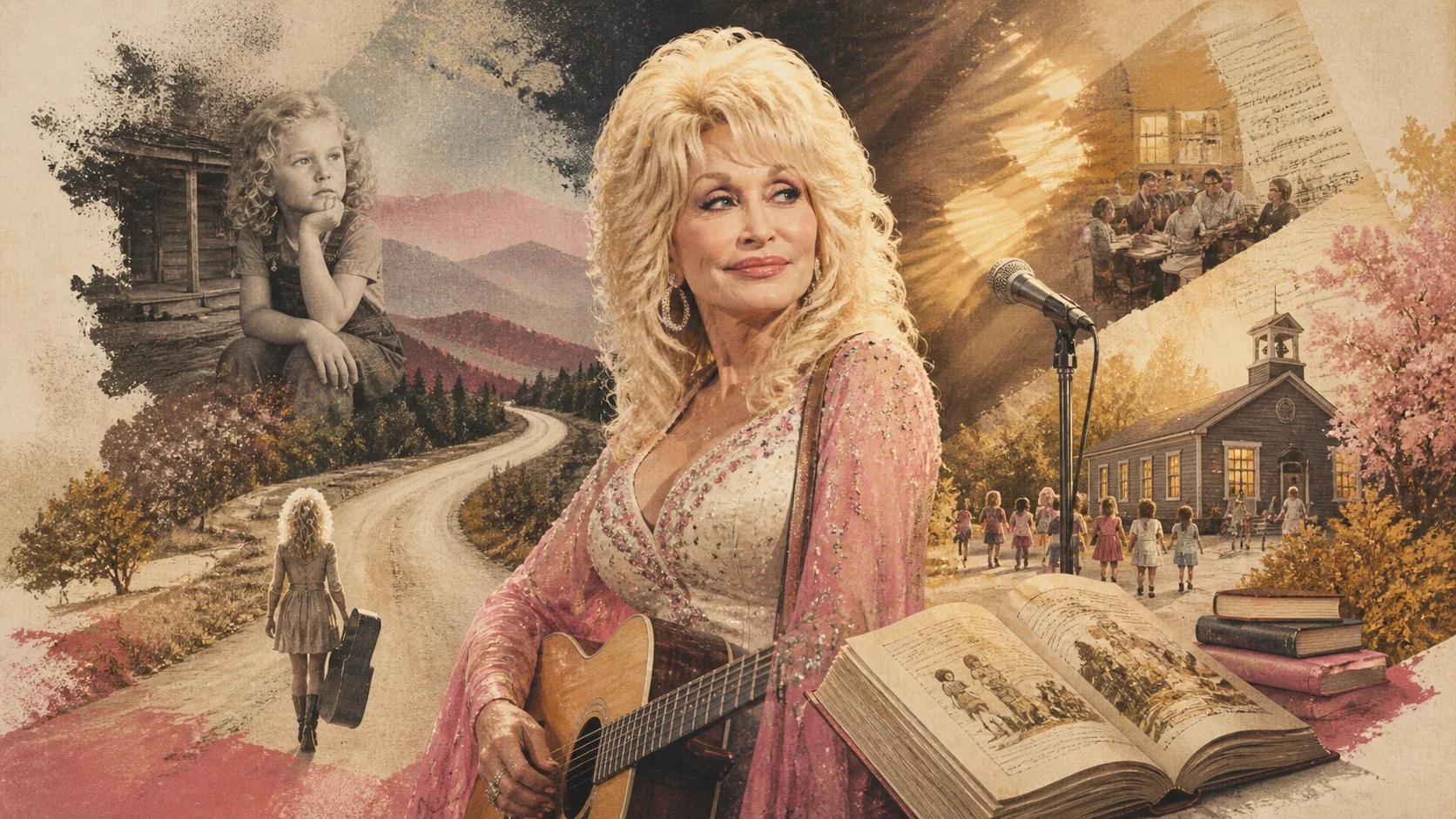
Dolly Parton · 1946–2026
Dolly Rebecca Parton began life as the fourth of 12 children in rural East Tennessee. Her family had little money. It did not have nothing: her mother carried songs and stories; her uncle Bill Owens helped open doors; local radio and television gave a gifted child somewhere to practise being heard.
That distinction matters. Poverty constrained her materially while family, culture, geography, helpers, timing and luck shaped what talent and work could become. Nobody rises alone—not even a person later made synonymous with individual success.
Fairytale? No.
Talent created the asset. Ownership allowed it to compound. The chain does not prove that everyone receives the same opportunities—or that effort alone defeats poverty.
The song
Parton wrote I Will Always Love You while leaving Porter Wagoner’s show. She later refused to surrender publishing control for an Elvis Presley recording. When Whitney Houston made the song globally enormous, the retained right mattered again.
The lesson is neither luck alone nor business mythology. Talent made a work. A difficult ownership decision allowed its value to keep moving through time.
Where did the success go?
The foundation reports its Buddy Program paid paired students for graduating. Its 35-to-6 per cent dropout claim remains programme-reported, not an independent causal finding.
The Imagination Library grew from Sevier County through local partnerships, mailing books monthly without marking children by income.
Dollywood made her origin part of a regional employment and tourism engine, not merely the setting for charitable cheques.
Two US$1 million Vanderbilt gifts supported COVID research—including critical early Moderna-related testing—and paediatric infectious-disease research.
The bounded tribute
Parton’s story does not prove poverty is fair, voluntary or equally escapable. It shows that beginnings do not impose absolute endings—and that effort works through conditions: culture, help, opportunity, ownership, timing and luck.
She could not give every child the path she travelled. So she gave some of them books, incentives to finish school, help when homes burned, jobs near home and research money when the world got sick.
She did not make an extraordinary escape into evidence that everyone else should simply try harder. She turned it into a wider starting line.
Show me the evidence
Biographical, institutional, foundation and recipient records checked 28 August 2026. Foundation outcome claims remain attributed; celebrity wealth estimates and unsupported lifetime-giving totals are excluded.
Associated Press
Open record ↗Library of Congress
Open record ↗U.S. Copyright Office / Library of Congress
Open record ↗Dollywood Foundation
Open record ↗Library of Congress and Dollywood Foundation
Open record ↗Vanderbilt University Medical Center
Open record ↗Lens analytical boundary
Lens assessmentThe question
Trace an extraordinary rise from poverty through helpers, work and ownership, then distinguish personal giving, foundation-reported outcomes and durable opportunity infrastructure.
Best-supported answer
Dolly Parton's mobility was real and exceptional, but not solitary or evidence of a fair meritocracy. Family culture, helpers, platforms, work, authorship, rights and luck all mattered. After wealth arrived, she anchored jobs in her home region and built or funded literacy, school-completion, disaster-recovery and medical-research pathways. Her most durable achievement was turning an improbable personal escape into infrastructure that widened opportunity for others.
What we still do not know
Checked 28 August 2026 Source packs were used as reporting leads; published evidence was checked independently.
Possible effects · We cannot say how likely
Retaining control of creative work can preserve value beyond a single performance. Directing some later wealth into books, education and research can widen access for other people—but the records do not trace every dollar or establish the independent effect of each programme.
Parton retained publishing control of a major work. Separate institutional records document literacy programmes and research gifts.
Retained rights helped create durable value that made later return flows possible.
Where the connection stopsThe admitted records do not provide an audited flow from particular royalties to particular programmes, or a causal estimate of those programmes' outcomes.
How people may respond
How an exceptional life is interpreted could influence whether attention stays on personal generosity or moves toward durable opportunity infrastructure.
What the evidence does not showThe programmes and reported reach are documented; their complete causal effect and transferability are not established.
Ownership, giving and long-running programmes are presented as linked but distinct actions.
Readers and institutions may focus on durable access rather than a one-time inspirational story.
Attention shifts toward programme design, continuity and who can participate.
Donors, educators and community institutions: Support or adapt sustained access mechanisms.
Resources can become embedded in programmes that outlast one event.
What we know has changedWe have not established that this possible change has happened.
What this does not showA durable programme does not prove every claimed outcome or that the model transfers unchanged.
This is the first time Lens has mapped this path. We have no later evidence showing whether it is happening more, less or about the same.
Prominent participation totals make programme scale visible.
Scale may be read as causal proof of later literacy, educational or life outcomes.
Attention concentrates on reach while comparison and outcome evidence receive less weight.
Supporters, media and institutions: Repeat or fund the model based mainly on scale.
The programme may grow without resolving its incremental effect.
What we know has changedWe have not established that this possible change has happened.
What this does not showReported reach is not the same as a measured counterfactual outcome.
This is the first time Lens has mapped this path. We have no later evidence showing whether it is happening more, less or about the same.
If local partners keep funding and delivering the book programme, and recipient institutions continue the supported research
Then the value of the original success can persist as access to books and research capacity beyond one person's direct involvement.
Would weaken this: Partner coverage contracts, delivery stops, or independent evaluation fails to support a claimed outcome.
Scope: The named literacy and research initiatives; not philanthropy or social mobility in general. Horizon: Future reviewed programme and evaluation records; no outcome date or probability is estimated.
If programme totals increase but evidence remains limited to institutional and programme reporting
Then Lens could document scale without claiming that the programme alone caused later literacy, graduation or health outcomes.
Would weaken this: A robust independent evaluation identifies a bounded effect, or corrected records materially change the reported reach.
Scope: Claims about the effect of the named programmes, not whether documented gifts or deliveries occurred. Horizon: Until suitable independent outcome evidence is reviewed; probability remains unestimated.
Records authorship and retained publishing control. It does not provide an audited trace from one song's earnings to later gifts.
Open evidence ↗The foundation describes its education programmes and reports the Buddy Program result. This is programme-reported evidence, not an independent causal evaluation.
Open evidence ↗Describes the Imagination Library's origin and partnership model. It does not establish the programme's independent causal effect on literacy.
Open evidence ↗Recipient account of a US$1 million gift and supported early research. It does not establish the share of later vaccine outcomes caused by that gift.
Open evidence ↗Recipient announcement of a US$1 million research gift. It does not report a measured health outcome from the funded work.
Open evidence ↗What could change this assessment?