Voice without control
Its MPs can vote, question, join committees, introduce private members' business and advocate. They do not determine confidence or supply in the current House.
The weekly paper
for curious people

See the connections.
Understand the consequences.
Swipe to see more sections →
Lens investigation Political power · Governing power
One Nation has reached 30% in a major national poll. But Australia does not elect governments by national primary vote. Lens follows the numbers, the promises and the people behind them to see what power the party holds now—and what it would need to build before it could govern.
The shortest answer
The poll gives One Nation attention, agenda-setting force and electoral leverage. Its six federal parliamentarians give it a much smaller amount of legislative power. They give it essentially no independent executive power.
That is not the same as saying the party has no experience. Its team includes a former Deputy Prime Minister, long-serving parliamentarians, a mining engineer, an agribusiness operator and a major construction-business owner.
The gap is between that experience and the numbers, breadth and government machinery required to administer the Commonwealth.
Power today
The House decides who governs. The Senate can pass, amend or block legislation. One Nation currently controls neither.
Its MPs can vote, question, join committees, introduce private members' business and advocate. They do not determine confidence or supply in the current House.
Thirty-nine votes are normally needed for a Senate majority. One Nation's senators can amend, inquire, use Estimates and negotiate. Their votes become decisive only when the larger blocs do not already have the numbers.
Labor 30+Greens 10=40 · enough
Coalition 27+One Nation 4=31 · not enough
30% is not 45 seats
At the 2025 federal election, One Nation received 6.40% of the national House first-preference vote and won no House seat at that election. Its two current MPs arrived later: Joyce changed parties and Farley won a by-election.
If support near 30% reached an election, it could produce a major realignment. The number of seats would still depend on where the votes sit, local candidates, who reaches the final count and how preferences flow.
Where this answer stops Lens has not converted 30% into a seat forecast. That requires an explicit seat model and assumptions the national poll does not provide.
The people behind the promises
Lens separates parliamentary, executive, professional and portfolio-specific experience. None alone proves someone would be a good minister.
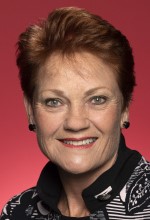 Senator · party leaderPauline HansonView four dimensions
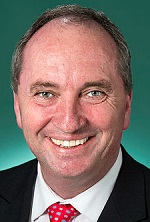 MP · New EnglandBarnaby JoyceView four dimensions
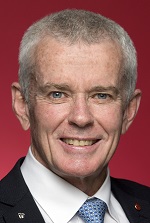 Senator · QueenslandMalcolm RobertsView four dimensions
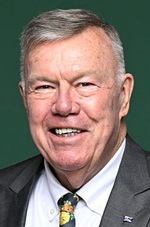 MP · FarrerDavid FarleyView four dimensions
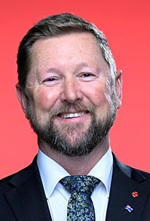 Senator · Western AustraliaTyron WhittenView four dimensions
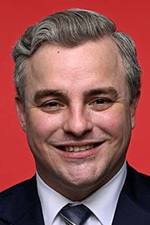 Senator · New South WalesSean BellView four dimensions
Main interactive
Open a portfolio to compare the promise, relevant experience and the government machinery needed to deliver it.
Restrict foreign farmland ownership, change Murray–Darling settings, support rural lending and reverse the live-sheep export ban.
Barnaby Joyce · David Farley · Malcolm Roberts
Legislation, budget appropriations, Agriculture and Water administration, and state or basin-government cooperation.
Executive government, House support, a Senate pathway and intergovernmental delivery.
Expand coal and gas, change oil and gas taxation, strengthen fuel security and increase Commonwealth participation in resources.
Malcolm Roberts · Barnaby Joyce · Tyron Whitten
Tax legislation, Treasury and Finance modelling, environmental approvals, state mining laws, capital and infrastructure.
Government, legislation, investment and state cooperation.
Change electricity-market rules, back coal and gas, introduce nuclear power and reduce bills by 20%.
Malcolm Roberts · Barnaby Joyce · Tyron Whitten
AEMC rule processes, federal legal change, nuclear regulation, sites, approvals, finance, workforce, grid planning and likely state cooperation.
Executive government plus a large legislative, regulatory and construction program. A 20% bill cut is an outcome target, not a guaranteed mechanism.
Cap visas at 130,000 a year, alongside longer waits for citizenship and welfare.
Pauline Hanson
Home Affairs, Migration Act settings, regulations, ministerial directions, program planning, visa categories and international arrangements.
A precise definition of the 130,000 figure, executive government, legal change where required and departmental implementation.
Family income splitting, lower fuel excise, changed tax thresholds and new resource-tax arrangements.
Barnaby Joyce · Malcolm Roberts · Tyron Whitten
Treasury and Finance modelling, legislation, revenue administration, distributional analysis and a complete Commonwealth budget.
Government, costed policy, legislation and central fiscal-administration depth.
Increase Medicare rebates, attract regional clinicians, link HECS relief to regional service and act on Medicare fraud.
No demonstrated specialist experience found in the sources reviewed.
MBS decisions, Commonwealth funding, workforce policy and state cooperation for hospitals and much frontline delivery.
Health-policy bench strength, costings, government and shared delivery. A higher rebate does not itself guarantee bulk billing.
Emphasise literacy, numeracy, traditional curriculum content and discipline.
Malcolm Roberts — former Montessori school board chair
Commonwealth funding and national policy, with states and territories operating government schools and controlling much delivery.
Government, funding agreements, state cooperation and deeper education-administration capability.
Reduce migration pressure, restrict foreign ownership and change tax settings affecting housing.
Tyron Whitten · Barnaby Joyce · David Farley
Commonwealth tax, migration, foreign investment and funding; state and local planning, land, tenancy, building rules and delivery.
Specific measures and intergovernmental delivery. Foreign investors are already generally barred from established homes until 30 June 2029, with exceptions.
Abandon net zero and expand coal, gas and nuclear energy.
Malcolm Roberts · Barnaby Joyce
The Climate Change Act 2022 puts net zero by 2050 in law; removing it requires legislation and a Senate pathway.
House support, Senate votes and a replacement policy and regulatory program.
A national program would require control of defence, diplomacy, alliances, intelligence and security policy.
Barnaby Joyce — Army Reserve and Cabinet experience
Classified briefings, alliances, procurement, international law, treaties and large departments.
A broader specialist bench, executive government and transition capability.
The party advocates changes across family law, justice and public administration.
Pauline Hanson · Sean Bell
Legal drafting, constitutional advice, courts, federal law-enforcement bodies and state justice systems.
Government and legal-professional bench depth. No lawyer was identified among the current six in the official biographies reviewed.
Build and reshape national infrastructure while supporting regional development and domestic industry.
Barnaby Joyce · Tyron Whitten · David Farley
Infrastructure Australia processes, budgets, procurement, approvals and state, territory and local delivery partners.
Executive authority, funded pipelines, procurement and intergovernmental agreements.
Reduce regulation, lower costs and use energy, tax and procurement policy to support Australian business.
Pauline Hanson · Malcolm Roberts · Tyron Whitten · David Farley · Barnaby Joyce
Tax and industrial legislation, regulators, procurement, budgets and coordination across portfolios.
Government, costed policy and administrative capacity across several departments.
“No demonstrated specialist experience found” means exactly that: no specialist experience appeared in the public sources Lens reviewed. It is not a verdict on fitness for office, and it does not measure advisers or internal structures that are not public.
The deeper test
One Nation's biggest capability gap may not belong to any one person. A Commonwealth government needs dozens of ministers and assistant ministers, a complete budget, legislation, national-security systems and departmental transition plans.
What Lens will watch
The answer after the evidence
One Nation's polling rise gives it political power now. Its six federal parliamentarians give it a much smaller amount of legislative power, and essentially no independent executive power.
If 30% becomes votes at an election, that equation could change quickly. But winning public attention is one stage. Winning seats is another. Building a government capable of administering the Commonwealth is another again.
New Lens in 8 · Direct companion investigationWatch how one interview became clips, reactions, polls and another story ▶
Show me the evidence
Official sources establish the Parliament, electoral rules and machinery. One Nation's own pages define its promises. Polling is attributed to the reported Newspoll result.
Checked 2 September 2026 Current parliamentary numbers, party affiliations and policy wording can change. Lens will update the story when the record changes.