Issue 001 · Story 5 · InternationalOne story. Many lenses.
Same evidence. Different perspective.
Viewing through
Whole story
Start with the shortest supported answer, then follow the evidence and the limits together.
What comes into focusIt keeps the claim, its source and the point where certainty ends in one view.
What this view may missA specialist Lens can make one practical consequence easier to see.
Changing the Lens changes what comes into focus. It never changes the evidence underneath.
Issue 001 Story 5 · International
A Crown Melon exchange caused outrage in Australia. Did Japan's government call it an insult?
No official Japanese statement found by Lens called the exchange an insult. One Japanese commentary strongly criticised it. Japan's current ambassador later said the comments were not made in the way they had been reported.
By LensPublished 15 August 2026About six minutes
What people heard
Japan's government said the Crown Melon exchange was an insult.
Not what the record says
Who actually called it insulting?
Short answer. Lens found strong criticism from Japanese and former-official voices, but no admitted official Japanese statement calling the exchange an insult.
Choose how to read this
Read, listen or follow the question.
The facts do not change. Each view uses the same published sources and leaves the same questions open.
◫Different viewsSee what each perspective notices—and may miss.
See through another Lens
Which view do you want to understand first?
Each view notices something useful. None is allowed to stand in for the complete evidence.
Japanese Government
The official record explains the trade gift; no admitted government statement calls the exchange an insult.
What this view explainsThe purpose of the melon and the boundary of the official record.
What it may missSilence does not reveal Takaichi's private reaction.
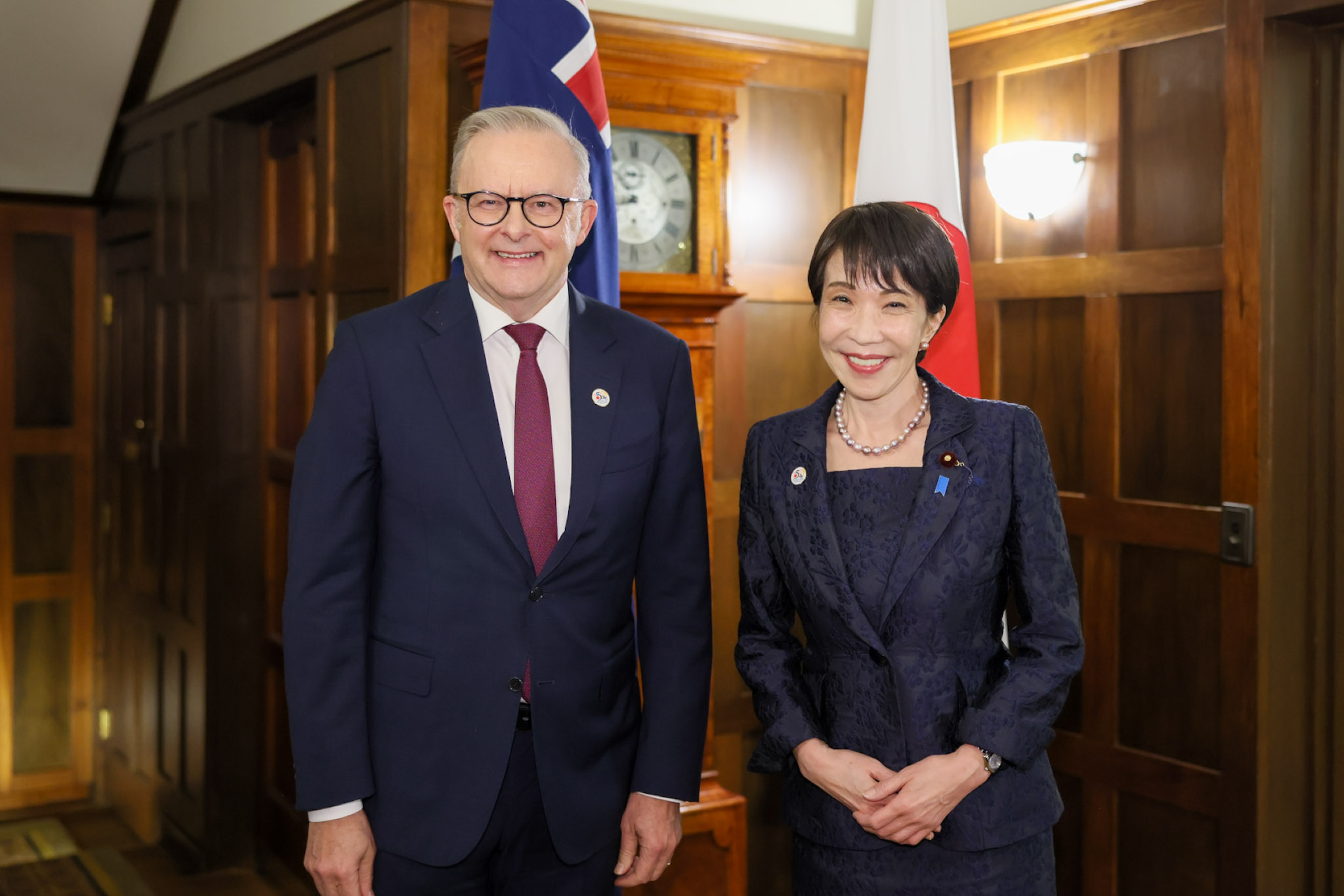
Anthony Albanese and Sanae Takaichi during the Japanese Prime Minister's May visit to Australia. Photograph from the Prime Minister's Office of Japan. Reused under Japan's Public Data License. Cropped for display by Lens.
The answer
Criticism from Japan is not the same as criticism by Japan.
01
The gift
Japan's official record says Prime Minister Sanae Takaichi gave Anthony Albanese a Shizuoka Crown Melon to mark the opening of Australian imports.
02
The criticism
A commentary in The Japan Times argued that the exchange mocked a carefully chosen state gift and Japan's first female prime minister.
03
The government response
Japan's current ambassador said Australia had explained that Albanese did not make the comments in the way they were reported. He pointed to the relaxed dinner and trust between the leaders.
What was the melon for?
It was a trade gift, not a random piece of fruit.
Australia opened its market to Japanese melons in January 2026. When Takaichi visited Australia in May, she gave Albanese a Shizuoka Crown Melon. Japan's official account says the gift marked that opening and carried a hope for more Japanese food exports.
The same record explains that Crown Melons are grown using a one tree, one fruit method. Growers leave one fruit to mature on each plant. That work helps explain why the melon can carry cultural and commercial meaning far beyond its supermarket value.
This does not decide whether a joke about the gift was acceptable. It explains what was being joked about and why some readers saw more than fruit.
Who said what?
The most repeated line did not come from Albanese.
AlbaneseThe giftHe described receiving a melon and said Takaichi brought two.
then
Podcast hostThe comparisonNikki Osborne made the Pamela Anderson comparison.
then
HeadlinesThe collapseSome posts and reports attached the host's comparison directly to Albanese.
AAP checked the original exchange and found that the Pamela Anderson line was misattributed to Albanese. The video still leaves people free to judge his own words, gesture and participation for themselves.
How the story grew
Four different voices became one idea called “Japan”.
01
A commentator
A writer in The Japan Times called the exchange disrespectful. That is a published Japanese view, not a government statement.
02
A former ambassador
Former ambassador Shingo Yamagami later criticised Albanese in an Australian newspaper. He no longer speaks for Japan's government.
03
Australian politics
Opposition figures demanded an apology and used the exchange to question the Prime Minister's judgment.
04
The current ambassador
Kazuhiro Suzuki did not repeat the claim of an insult. His public statement stressed how Australia had explained the exchange and the trust between the leaders.
What remains unknown
We do not know what all of Japan thought.
Takaichi has not made a public statement describing her personal reaction
No sound measure shows how many people in Japan saw the exchange or felt offended
News reports do not amount to a national opinion
A reported diplomatic cable is not the same as a complete public record
The careful answer is narrower than the headlines. Criticism existed. Official concern amounting to a diplomatic dispute was not established.
The simple test
Replace the country's name with the person who actually spoke.
When a headline says Japan was offended, ask who in Japan said so. A commentator, a former official, the current government and the public are four different sources. Keeping them separate changes the story.
Issue 001 record Original interview, Japanese Government record, public ambassador response and published commentary reviewed · published 15 August 2026 · fact, opinion and unknowns kept separate Inspect the evidence register →
Did Japan's government call the Crown Melon exchange an insult? | Lens